
Introduction
Every athlete, whether a professional or a weekend enthusiast, knows that training alone is not enough. The food you eat shapes your energy, your recovery, and even your mental sharpness. A balanced sports diet isn’t just about eating “healthy” — it’s about fueling performance with precision and consistency.
This guide explores how to create a diet that supports strength, stamina, and long-term health, while remaining enjoyable and sustainable.
What Does “Balanced Diet” Really Mean for Athletes?
For athletes, balance means giving the body everything it needs to perform and recover — no more, no less. It’s about aligning macronutrients (carbs, proteins, fats) and micronutrients (vitamins and minerals) with your training intensity and personal goals.
Think of your diet as a triangle:
-
Carbohydrates – the body’s preferred source of energy.
-
Proteins – the building blocks for muscles and tissue repair.
-
Fats – essential for hormone balance, joint health, and endurance.
Together, these nutrients create a foundation for steady energy, recovery, and focus.
Carbohydrates – The Engine Fuel
Carbs are the athlete’s main power source. When you train, your muscles burn glycogen — a storage form of glucose. Without replenishing it, fatigue hits faster and performance drops.
Healthy carb sources include:
-
Whole grains (oats, brown rice, quinoa)
-
Starchy vegetables (potatoes, sweet potatoes)
-
Fruits (bananas, dates, oranges)
-
Legumes (lentils, chickpeas)
Aim to have carbs in every main meal, especially before and after workouts. Complex carbs digest slowly, providing lasting energy.
🍗 Protein – The Builder and Healer
After every workout, your muscles are slightly damaged — that’s how they grow stronger. Protein is what rebuilds those fibers.
Great protein sources for athletes:
-
Lean meats (chicken, turkey, beef)
-
Fish (salmon, tuna)
-
Eggs and dairy
-
Plant sources (beans, tofu, lentils, quinoa)
Distribute protein evenly throughout the day — not just after workouts. About 20–30 grams per meal keeps muscles repairing and growing.
🥑 Fats – The Unsung Hero of Performance
Many athletes fear fat, but it’s crucial for sustained energy and recovery. Healthy fats improve hormone function and reduce inflammation caused by intense training.
Include:
-
Avocado
-
Olive oil
-
Nuts and seeds
-
Fatty fish (rich in omega-3)
Avoid trans fats and highly processed oils. Balance is key — fats should make up about 25–30% of your total calories.
💧 Hydration – The Silent Nutrient
Even a 2% drop in hydration can reduce performance dramatically. Water regulates temperature, helps transport nutrients, and supports joint lubrication.
Athletes should drink small, steady amounts throughout the day — not just during training.
Add electrolytes (sodium, potassium, magnesium) during long workouts or hot weather sessions.
Timing Matters – When You Eat Is as Important as What You Eat
Nutrient timing enhances how your body uses food for energy and recovery:
-
Before training: Complex carbs + a bit of protein (e.g., oatmeal with yogurt and fruit).
-
After training: Quick-digesting carbs + protein (e.g., banana with whey shake).
-
During long workouts: Sports drinks or fruit for glucose and electrolytes.
Proper timing prevents fatigue and speeds up recovery — making your next workout even better.
Micronutrients and Vitamins – The Tiny Giants
Vitamins and minerals might not provide energy, but they make energy possible.
Key nutrients for athletes:
-
Iron (oxygen transport) – found in red meat, spinach, lentils
-
Calcium & Vitamin D (bone health) – in dairy, sardines, and sunlight exposure
-
Magnesium (muscle relaxation) – in nuts, seeds, leafy greens
-
Zinc (immunity and recovery) – in seafood and beans
Building Your Plate – The Simple Rule
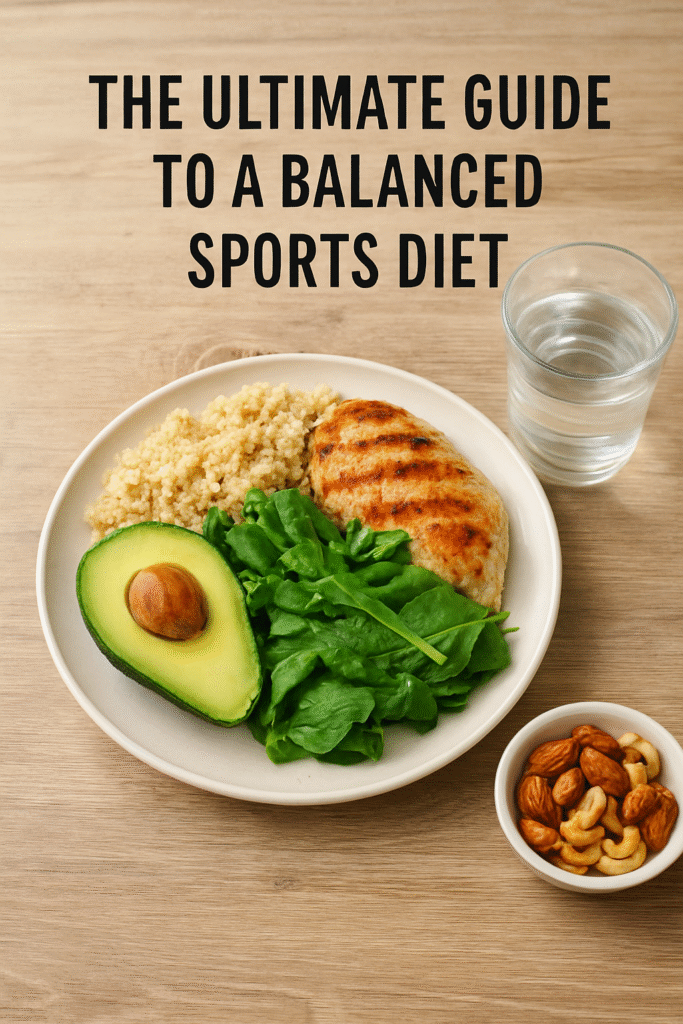
A balanced athlete’s plate should look like this:
-
½ vegetables and fruits (color and antioxidants)
-
¼ lean protein
-
¼ complex carbs
-
Plus a small portion of healthy fats (like olive oil or avocado)
This visual method makes it easy to adjust portions depending on your activity level.
🌿 Real-Life Tip
Don’t overcomplicate it. Consistency matters more than perfection. If 80% of your meals are balanced and natural, your body will perform at its best. Listen to your hunger cues, rest enough, and eat mindfully.
Conclusion
A balanced sports diet isn’t a strict plan — it’s a lifestyle. It’s about respecting your body as the engine that carries your ambitions. The right food not only powers your performance but protects your health, mood, and longevity.
Eat smart, stay hydrated, rest deeply — and let your plate be your strongest teammate.