
Introduction: The Science and Soul of Eastern Sweets
In the rich culinary heritage of the Middle East, Kunafa (or Knafeh) holds a place of honor — a dessert that transcends taste to embody art, culture, and celebration. Traditionally made from shredded phyllo pastry (kataifi), sweet syrup, and cheese or cream, Kunafa represents the delicate balance between texture, flavor, and aroma.
But while this dessert has enchanted generations, today’s nutritional science invites us to revisit it from a modern lens — how can we preserve its authentic taste while making it lighter, more balanced, and healthier?
This article explores the evolution of Kunafa from a classic indulgence to a mindful dessert, combining traditional technique with nutritional awareness.
We’ll break down its ingredients, uncover their biochemical roles in the body, suggest healthy alternatives, and reveal how a dessert like this can fit within a holistic diet without guilt.
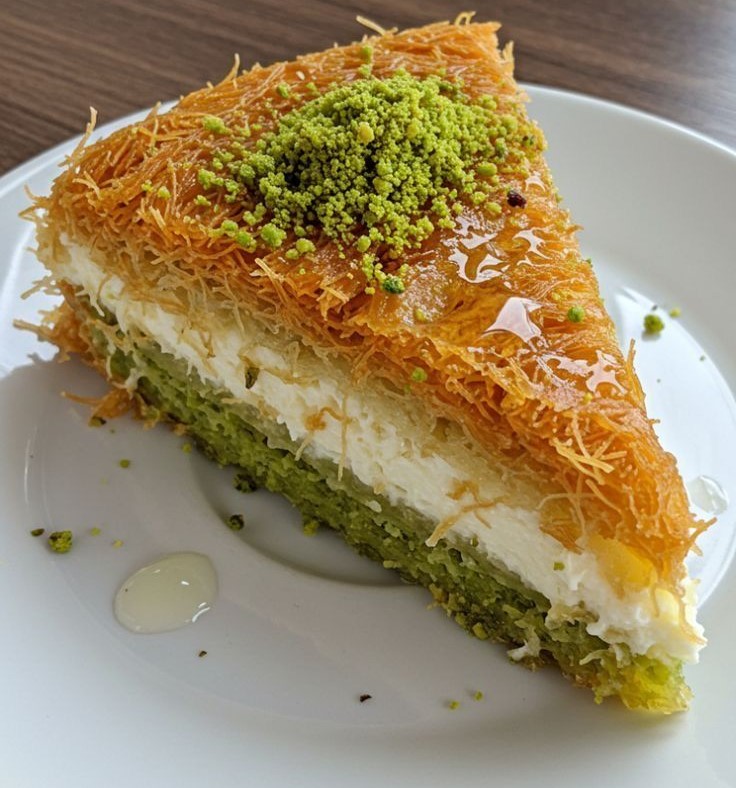
The Cultural Essence of Kunafa
Kunafa is not just food; it’s a symbol of hospitality, joy, and togetherness. Originating from the Levant and spreading across the Arab world, it appears in countless variations:
-
Kunafa Nabulsiya (from Palestine) with Nabulsi cheese.
-
Kunafa bil Qishta (with clotted cream).
-
Kunafa with Pistachios and Honey, a modern twist.
Each version reflects local identity and ingredients, yet the essence remains constant — a warm, golden crust layered with softness and sweetness, symbolizing balance and harmony.
In traditional celebrations — Ramadan nights, Eid feasts, and weddings — Kunafa plays the role of the “final smile” on the table, connecting generations through its shared flavor memory.
The Classic Ingredients
Traditional Kunafa combines:
-
Kataifi dough (shredded phyllo pastry): thin strands of semolina dough or wheat flour.
-
Butter or ghee: provides crispiness and rich aroma.
-
Cheese or cream (Qishta): adds smoothness and moisture.
-
Sugar syrup (Attar): sweetens and gives sheen.
-
Pistachios: add crunch, flavor, and a luxurious touch.
While delicious, the traditional recipe is calorie-dense — often exceeding 500 kcal per slice. The challenge for a health-conscious version lies in maintaining texture and taste while reducing excess sugar and fat.
A Healthier Reimagining: Ingredients and Substitutions
To make a healthy pistachio and cream Kunafa, let’s reimagine each component scientifically:
🟡 1. The Dough (Kataifi)
Traditional kataifi is made from refined wheat flour, offering texture but little nutrition. A healthier version can be:
-
Whole wheat kataifi dough (adds fiber, magnesium, and better satiety).
-
Oat kataifi (gluten-friendly and heart-healthy alternative).
-
Lightly toasted with extra virgin olive oil instead of butter — gives crunch with fewer saturated fats.
🟢 2. The Filling (Cream Layer)
Instead of heavy cream or full-fat cheese:
-
Use Greek yogurt blended with low-fat ricotta for a creamy texture and high protein.
-
Add a touch of honey or natural vanilla extract for flavor.
-
For vegan options, use cashew cream (blended soaked cashews + almond milk).
🟣 3. The Sweet Syrup
Replace refined sugar syrup with:
-
Natural date syrup, raw honey, or agave nectar (lower glycemic index).
-
Infuse with rose water or orange blossom for aromatic balance.
🟤 4. The Nuts (Pistachios)
Pistachios are naturally nutrient-rich — keep them as they are, but roast them without salt or oil to maintain their antioxidant content.
Healthy Kunafa Recipe: Step-by-Step
Ingredients (Serves 8)
-
250 g whole wheat kataifi dough
-
3 tbsp extra virgin olive oil or coconut oil
-
250 g low-fat ricotta cheese
-
150 g Greek yogurt (unsweetened)
-
2 tbsp natural honey
-
1 tsp rose water
-
½ tsp vanilla extract
-
50 g crushed pistachios
-
½ cup natural syrup (date or agave syrup diluted with warm water)
Preparation
-
Preheat the oven to 180°C (350°F).
-
Prepare the dough:
-
Separate the kataifi strands gently.
-
Mix with olive oil until lightly coated.
-
-
Make the cream filling:
-
Blend ricotta, yogurt, honey, vanilla, and rose water until smooth.
-
-
Assemble:
-
Spread half the kataifi dough in a greased baking pan.
-
Add the cream layer evenly.
-
Cover with the remaining dough.
-
-
Bake for 25–30 minutes until golden.
-
Drizzle syrup while still warm, and top with crushed pistachios.
This version provides all the sensory satisfaction of the original — crisp outside, creamy inside, nutty top — but with 40% less sugar and fat.
Nutritional Breakdown (Per Slice Approx.)
| Nutrient | Traditional Kunafa | Healthy Kunafa | Health Impact |
|---|---|---|---|
| Calories | 520 kcal | 310 kcal | –40% |
| Fat | 26 g (mostly saturated) | 12 g (mostly unsaturated) | Better heart health |
| Sugar | 38 g | 15 g (natural) | Lower glycemic load |
| Protein | 7 g | 13 g | Increased satiety |
| Fiber | 1 g | 4 g | Improved digestion |
The healthy version is not only lighter — it actually offers functional nutrition that supports metabolism, heart health, and blood sugar balance.
🌰 The Nutritional Power of Pistachios
Pistachios are the green jewels of this dessert, rich in:
-
Antioxidants (lutein, zeaxanthin): protect eye and skin cells.
-
Plant-based protein (6 g per 30 g).
-
Healthy fats (oleic and linoleic acids) for cardiovascular support.
-
Vitamin B6 and magnesium, which boost mood and nerve function.
Regular consumption of pistachios has been linked in clinical studies to improved cholesterol levels, better blood sugar control, and even enhanced gut microbiota diversity.
🧬 The Science Behind “Healthy Sweetness”
Why does this dessert still feel satisfying even with less sugar?
Because taste perception is not purely about sweetness — it’s a multi-sensory interaction between aroma, fat texture, and flavor compounds.
-
Olive oil and yogurt provide mouthfeel similar to butter.
-
Honey and rose water stimulate aromatic satisfaction.
-
Whole grains add depth and fiber that slow down digestion.
This combination sustains satiety longer than refined pastries, preventing sugar spikes and post-meal fatigue.
💚 Psychological and Emotional Benefits
Desserts like Kunafa aren’t only about physical nutrition; they feed the soul.
From a psychological standpoint, enjoying a mindful portion of a culturally familiar dessert reduces cortisol (stress hormone) and enhances serotonin (happiness hormone).
Eating mindfully — savoring each bite, appreciating its aroma, texture, and heritage — transforms food into a mind-body experience.
☕ Perfect Pairings
For a balanced experience, serve your Kunafa with:
-
A small cup of unsweetened green tea (aids digestion).
-
Or black coffee (balances sweetness with bitterness).
-
Or even warm milk with cardamom, for a soothing touch.
These combinations complement the dessert’s richness while enhancing nutrient absorption.
Integrating Kunafa into a Healthy Lifestyle
Yes, even desserts like Kunafa can fit into a holistic wellness plan, if approached with balance:
-
Enjoy once or twice a week, preferably after a protein-rich meal.
-
Focus on quality ingredients — natural oils, whole grains, fresh nuts.
-
Practice portion mindfulness — a small slice can deliver satisfaction without excess.
Remember: health is not about restriction, but about relationship — understanding food as nourishment, not guilt.
The Beauty of Balance
Health-conscious cooking doesn’t mean abandoning tradition — it means evolving it.
When you prepare Kunafa with love, fresh ingredients, and awareness, you keep alive the spirit of the dessert: warmth, generosity, and pleasure.
This healthy reinterpretation allows you to enjoy every golden bite — guilt-free, heart-happy, and nutritionally empowered.
💬 Final Thoughts
The Pistachio and Cream Kunafa is proof that tradition and science can coexist beautifully.
In one slice, you find culture, chemistry, and creativity — a dessert reborn for the modern wellness era.
By adjusting simple ingredients — switching refined fats for olive oil, sugars for honey, cream for yogurt — you redefine indulgence into something that heals as it delights.
So next time you crave sweetness, don’t reach for industrial snacks — make your own kunafa, golden and green, crispy and creamy, joyful and nourishing.
Because true health is not the absence of dessert — it’s the presence of harmony between pleasure and