
Introduction: The Heartbeat of Moroccan Kitchens
There are few dishes in the world that carry both the simplicity of daily life and the grandeur of heritage quite like Moroccan couscous. In Morocco, couscous is not just food — it is a symbol of togetherness, hospitality, and the poetry of the land. Every Friday, homes across the country fill with the warm, earthy aroma of steamed semolina grains mingling with vegetables, chickpeas, tender meat, and a touch of saffron. It is a meal that unites generations and celebrates abundance, simplicity, and balance.
In Moroccan culture, couscous is prepared with patience and intention. It embodies the idea that cooking is an act of love. Families gather around the communal dish, sharing from one large platter, often topped with slow-cooked lamb, chicken, or even fish depending on the region. Each spoonful tells a story — of the fertile fields of barley and wheat, of the spices that once crossed the Sahara on camel caravans, and of the women whose skilled hands have perfected this ancient art over centuries.
The Origins of Couscous: A Journey Through Time
The story of couscous begins thousands of years ago with the Berbers, the indigenous people of North Africa. Archaeological evidence suggests that couscous-making tools — perforated clay steamers — existed as far back as the 9th century. For the Berbers, couscous was both a practical and symbolic food. It was nutritious, easy to store, and versatile enough to accompany any stew or seasonal vegetable.
As trade routes expanded through the Maghreb, couscous traveled with them, reaching distant lands such as Algeria, Tunisia, and beyond. Yet Morocco remained its beating heart — a place where the dish evolved into dozens of regional variations, each with its own local ingredients and methods. From the Couscous Tfaya of Fez (sweetened with caramelized onions and raisins) to the Couscous Bidaoui of Casablanca (with tender lamb and chickpeas), each region tells its own delicious tale.
Couscous eventually became the national dish of Morocco — an emblem of hospitality and cultural identity. It was traditionally prepared on Fridays after the Jumu’ah prayer, symbolizing unity, gratitude, and peace. Guests were always welcome at the table, and serving couscous was a gesture of warmth and respect.
Ingredients and Preparation: The Art of Simplicity
At its heart, Moroccan couscous is an exercise in balance. The base — tiny grains of semolina — must be steamed several times to achieve a light, fluffy texture. Unlike boiled pasta or rice, couscous absorbs flavor through gentle steaming, which preserves its delicate consistency.
The Key Components:
-
Couscous grains (semolina) – the foundation of the dish.
-
Meat – lamb, chicken, or beef are most common, though coastal regions use fish.
-
Vegetables – carrots, zucchini, pumpkin, turnips, and cabbage bring both nutrition and color.
-
Chickpeas – for added protein and creaminess.
-
Spices – saffron, ginger, turmeric, cinnamon, and black pepper create its warm signature flavor.
-
Ras el Hanout – the iconic Moroccan spice blend of up to 30 ingredients, giving depth and aroma.
The Cooking Process:
Traditional couscous is steamed in a couscoussier, a two-part pot with a perforated upper section. The stew (known as marqa) simmers below while the couscous grains steam above, absorbing the fragrant vapors. The grains are fluffed by hand between steamings — a meditative process that requires both care and rhythm.
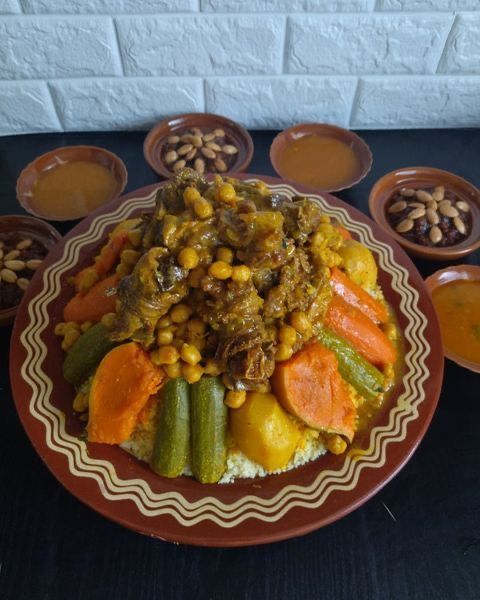
Once ready, the couscous is shaped into a dome on a large platter, the vegetables and meat placed artistically on top, and the broth drizzled gently over it. The result is a dish that is as visually stunning as it is flavorful.
Nutritional Value: A Meal of Harmony and Health
Couscous might appear humble, but nutritionally it is a powerhouse.
Each serving offers a balance of complex carbohydrates, lean protein, fiber, and essential vitamins.
Nutritional Breakdown (per serving):
-
Calories: ~350–400 kcal
-
Protein: 20–25 g (depending on the meat used)
-
Carbohydrates: 45–55 g
-
Fiber: 5–7 g
-
Fat: 10–15 g (mostly from olive oil and natural fats)
-
Rich in: Iron, Zinc, Magnesium, Vitamin B6, Folate
Couscous provides slow-releasing energy, making it an ideal meal for long days of work or fasting. The chickpeas and vegetables offer a variety of micronutrients and plant-based proteins, while olive oil and spices bring anti-inflammatory properties.
The balance of flavor mirrors the balance of health — sweet and savory, protein and fiber, comfort and vitality.
Health Benefits of Moroccan Couscous
-
Supports Digestive Health:
Thanks to its high fiber content, couscous aids digestion and promotes gut health. -
Rich in Protein:
When paired with lamb or chickpeas, couscous becomes a complete protein meal — excellent for muscle recovery and strength. -
Boosts Immunity:
Spices like turmeric, ginger, and cinnamon are packed with antioxidants that strengthen the immune system. -
Heart-Friendly:
Olive oil and vegetables contribute to healthy cholesterol levels and cardiovascular health. -
Great for Balanced Diets:
Couscous is naturally low in fat and pairs well with plant-based or Mediterranean diets.
Couscous in Moroccan Culture: More Than a Dish
In Morocco, couscous carries deep emotional meaning. It is a dish of reunion — shared at family gatherings, weddings, and celebrations. It also appears in times of remembrance, offered in honor of loved ones who have passed.
The ritual of serving couscous is itself poetic: everyone gathers around one large platter, sitting close, eating from their section with the right hand, and sharing conversation and laughter. The act of sharing food — lfdila — is a sacred Moroccan value.
Across Morocco, couscous also marks seasonal and spiritual rhythms.
-
On Fridays, it celebrates peace and blessings.
-
During Eid and harvest festivals, it symbolizes abundance.
-
In winter, it’s made with turnips and pumpkin for warmth.
-
In spring, it features fresh peas and herbs for renewal.
Every region adds its touch — in the Atlas Mountains, it’s heavier with root vegetables; in the coastal cities, lighter and scented with preserved lemons and fish. Yet everywhere, the heart of couscous remains the same: unity through food.
Serving and Presentation: A Feast for the Eyes
Presentation is everything in Moroccan cuisine. The couscous platter is not just food — it’s art. The golden grains form the base, vegetables arranged symmetrically like petals, and meat placed proudly on top. A drizzle of broth brings shine and aroma.
Couscous is often served with lben (fermented milk) or mint tea, balancing the warmth of the spices with cool refreshment. When guests arrive, they’re greeted not just with food, but with a full sensory experience — the fragrance of saffron, the colors of the vegetables, and the gentle steam rising from the dish.
Conclusion: The Spirit of Moroccan Couscous
Moroccan couscous is far more than a meal — it’s a story told through generations. It teaches patience, creativity, and respect for nature’s bounty. It embodies the Moroccan values of family, hospitality, and balance.
Each grain carries the warmth of the sun, the history of the land, and the tenderness of the hands that prepared it. Whether you enjoy it in a Marrakech courtyard, a coastal kitchen in Essaouira, or your own home far away, couscous connects you to something timeless — the soul of Morocco.
So, the next time you taste it, remember: this is not just food.
It’s memory, tradition, and love served on a single plate.