
Introduction: The Battle Between Taste and Health
Every parent knows the challenge: kids love crispy fries, golden chicken fingers, and a glass of sweet juice — but as adults, we worry about nutrition, balance, and long-term health.
What if we told you that your child can enjoy the same meal while still getting essential nutrients for growth, energy, and a strong immune system?
Welcome to the FitEats approach — where fun meets fuel and every bite becomes a building block for a healthier future.
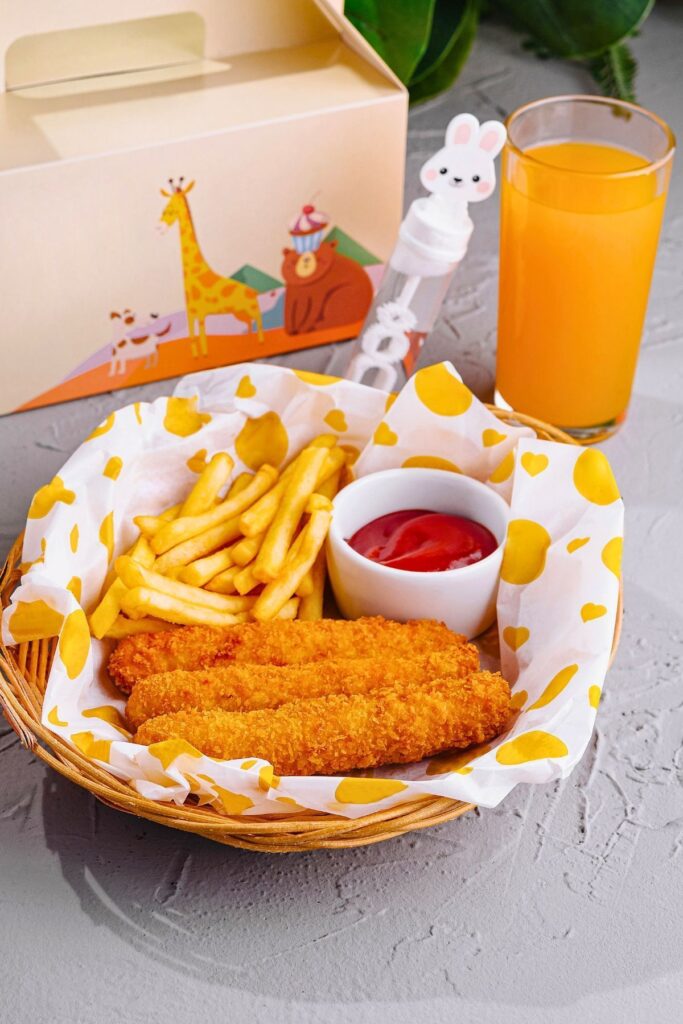
Why Kids Love Fried Foods — and How to Make Them Healthier
Children are naturally drawn to foods that are crispy, colorful, and flavorful. The crunch of fried chicken or the golden glow of French fries triggers pleasure centers in the brain — the same ones that light up when they play or laugh.
But traditional fried foods can bring unwanted guests:
-
Excess oils and trans fats
-
High sodium levels
-
Refined carbohydrates
The key isn’t to ban these foods — it’s to transform them.
Here’s how:
-
Use air-frying or oven-baking instead of deep frying.
-
Replace white flour coating with whole-grain breadcrumbs or crushed oats.
-
Marinate the chicken in Greek yogurt and herbs for extra protein and flavor.
🧠 FitEats Insight: Air-fried chicken retains about 40% more protein quality than deep-fried chicken — and cuts calories by up to 60%.
Reinventing the Fries: From Junk to Joy
French fries don’t have to be the enemy of health! You can turn them into a power-packed side dish by swapping ingredients and methods.
Try these ideas:
-
Use sweet potatoes or carrots instead of regular potatoes.
-
Bake or air-fry them with a drizzle of olive oil.
-
Sprinkle with paprika, garlic powder, or rosemary for natural flavor.
These colorful alternatives are rich in vitamin A, fiber, and potassium, supporting better eyesight and digestion — perfect for growing bodies!
🥕 FitEats Tip: Pair baked fries with a dip made of Greek yogurt and tomato purée — it adds probiotics and calcium without excess sugar or fat.
🍗 The Power of Protein for Growing Kids
Protein is the superhero nutrient of childhood. It builds muscles, repairs tissues, and keeps hunger under control.
Your child’s golden chicken strips can be a great source of protein if cooked smartly.
Instead of frying in heavy oil:
-
Grill or bake your chicken fingers.
-
Use egg whites and oat flour for coating.
-
Serve with vegetable sticks (carrots, cucumbers, or celery) for color and crunch.
💪 Nutrition Breakdown (per serving):
Protein: 24g
Carbohydrates: 18g
Fat: 7g (mostly healthy fats)
Calories: Around 250
That’s a win-win — delicious and nourishing!
🍊 Don’t Forget the Drink: Smarter Juice Choices
That glass of orange juice looks refreshing — and it can be, if chosen wisely.
Many store-bought juices are loaded with added sugars and artificial flavors. Instead, go for:
-
Freshly squeezed juice with no added sugar.
-
Infused water with slices of orange, lemon, or mint.
-
Or better yet, a smoothie with whole fruits and Greek yogurt.
This keeps your child hydrated and provides vitamin C, potassium, and antioxidants, which boost immunity and energy.
🍹 FitEats Tip: Add a few chia seeds to the smoothie — they’re tiny but mighty, adding omega-3s and fiber to support brain health.
👩🍳 Making Mealtime Fun and Educational
Children are more likely to eat healthy when they’re involved in the process.
Let them:
-
Choose vegetables for the plate’s “color section.”
-
Mix the chicken coating ingredients.
-
Arrange the meal like an art project.
When kids feel ownership, food becomes an adventure — not a battle.
🎨 FitEats Idea: Turn the plate into a “rainbow challenge.” Encourage your child to include at least three colors in every meal!
Building Balanced Plates: The 3-Section Rule
A great visual trick for balanced eating is the 3-section rule:
-
🥩 1/3 protein (grilled chicken, fish, eggs)
-
🥦 1/3 vegetables or salad
-
🍚 1/3 healthy carbs (sweet potatoes, rice, whole wheat bread)
You can use colorful sectioned plates like in the FitEats image above to teach portion control naturally.
🧒 Why it works: Children learn visually — colorful portions make nutrition easy to understand without strict rules.
The Science Behind Kids’ Nutrition
Growing children need a mix of macronutrients (protein, fats, carbs) and micronutrients (vitamins, minerals) every day.
Here’s what the science says:
| Nutrient | Function | Kid-Friendly Source |
|---|---|---|
| Protein | Builds muscles, hormones | Chicken, eggs, lentils |
| Calcium | Strengthens bones & teeth | Milk, cheese, yogurt |
| Iron | Carries oxygen in blood | Spinach, red meat, beans |
| Vitamin C | Boosts immunity | Oranges, bell peppers |
| Fiber | Supports digestion | Oats, veggies, fruits |
Balanced meals help stabilize blood sugar, improve focus, and reduce mood swings — meaning fewer tantrums and better school performance! 🎓
💡 Realistic Tips for Busy Parents
Healthy doesn’t have to mean complicated. Try these simple hacks:
-
Prep ahead — Cut veggies and marinate chicken on weekends.
-
Use cute lunch boxes — Children eat more when their food looks fun.
-
Add small treats — A few baked fries or dark chocolate chips keep the joy alive.
-
Avoid labeling food as “good” or “bad.” Instead, say “this food helps you grow strong” or “this one gives you quick energy.”
🕒 FitEats Reminder: Consistency beats perfection. A 70/30 balance (healthy most of the time, fun sometimes) is sustainable for the whole family.