
Feeding a child is one of the most important things a parent does every day. It is also one of the most emotional. You are not just giving food — you are giving comfort, health, and a sense of care. Every spoonful tells your child that they are loved. But it can be hard to know what a “good meal” should look like. Should it be heavy or light, plain or colorful, simple or creative?
A balanced meal does not need to be complicated. It can be made from ordinary ingredients — rice, beans, vegetables, meat, or potatoes — arranged with thought and warmth. The goal is to give the body what it needs to grow strong and the mind what it needs to stay curious and active.
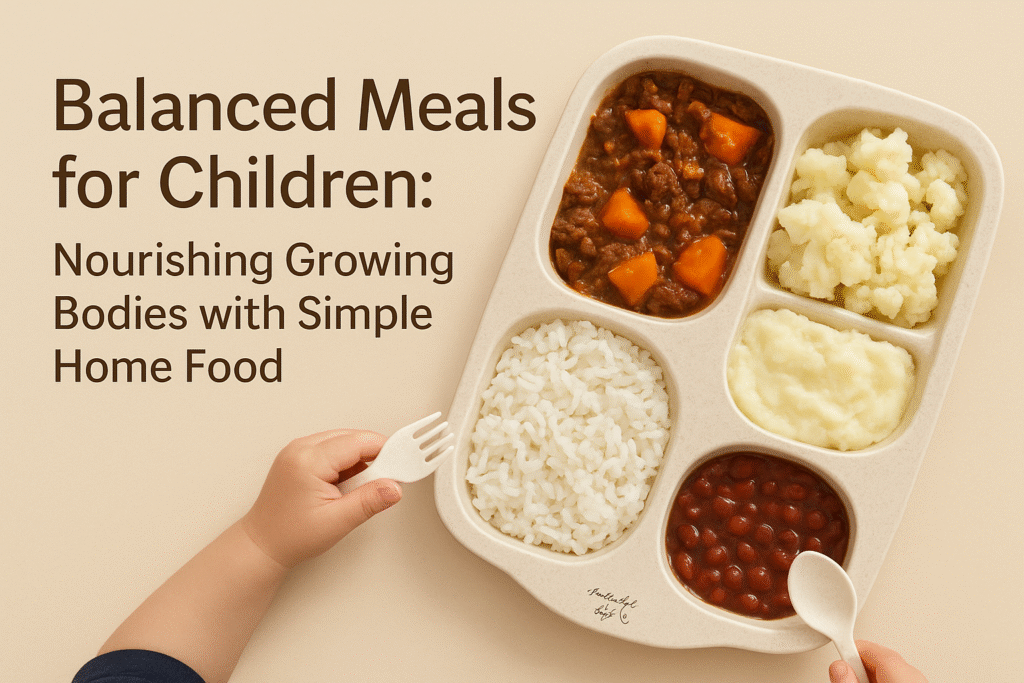
Imagine a plate divided into four or five small spaces: rice in one corner, beans in another, a scoop of mashed potatoes, a few pieces of cooked cauliflower, and a warm mix of beef and carrots in the center. It looks humble, but it holds everything a child’s body needs: energy, protein, vitamins, and flavor.
Why Balance Matters
Children are growing faster than we can see. Their bones are stretching, their brains are developing, and their immune systems are learning to defend them. This growth demands a mix of nutrients — not too much of one thing, and not too little of another.
Carbohydrates give energy for movement and play. Proteins build muscles and repair small injuries. Vegetables bring vitamins that keep the eyes bright and the skin healthy. Fats help the brain grow and store energy for later. And fiber keeps the digestion smooth and steady.
A balanced meal is like a small orchestra — every food plays its own note. When one is missing, the music feels incomplete.
What to Put on the Plate
Rice or Potatoes
These foods are full of carbohydrates, which are the body’s main fuel. White rice is light and easy to digest, good for smaller children. Mashed potatoes are soft, creamy, and comforting. Mixing a bit of both gives variety and teaches the child that meals can have different textures.
Beans
Beans are one of the best plant-based sources of protein. They also give fiber, which keeps digestion regular. They are filling but gentle, and they mix well with rice. Together, they form a complete source of amino acids — an ancient combination found in many cultures around the world.
Meat or Fish
Small portions of beef, chicken, or fish provide protein, iron, and zinc. These are essential for building blood cells and maintaining energy. When cooked slowly with vegetables like carrots or onions, the flavors become sweet and soft, easy for a child to enjoy.
Vegetables
Every plate should have some color from vegetables. Carrots, broccoli, cauliflower, peas, or zucchini — each adds something special. Carrots are rich in vitamin A for the eyes. Cauliflower supports the immune system and helps digestion. When steamed or lightly sautéed, they keep their shape and nutrients.
A Little Fat
Fat is not the enemy. Children need it more than adults because their brains are still developing. A bit of olive oil, a small piece of butter in the mashed potatoes, or some avocado slices can make a meal both healthy and satisfying.
How to Make Healthy Food Appealing
Many children refuse vegetables or unfamiliar foods. Parents often worry or get frustrated, but patience works better than pressure.
The first trick is color. A colorful plate attracts attention. Orange carrots, green vegetables, white rice, and red beans make a plate look lively. Children are naturally drawn to bright colors.
The second trick is shape and portion. Small portions are less intimidating. Dividing food into small sections makes it easier for a child to explore different tastes one at a time.
The third trick is flavor. Children may not like strong spices, but mild flavors made from herbs, garlic, or onions cooked slowly can make a big difference. Avoid heavy salt or artificial sauces — they hide the natural taste of real food.
And finally, let your child participate. Allow them to choose between two vegetables or help stir the mashed potatoes. When they feel involved, they are more curious and open to trying.
Cooking with Simplicity
You don’t need fancy recipes to make healthy meals. What matters most is the method.
Beef and Vegetable Stew:
Cut a small piece of beef into cubes, cook it gently with chopped onions, carrots, and tomatoes. Add a little water and let it simmer until tender. The result is soft, flavorful meat and a mild sauce that mixes perfectly with rice or potatoes.
Rice:
Rinse the rice well and cook it with a small pinch of salt and a teaspoon of oil. When the grains are fluffy, it is ready to serve.
Mashed Potatoes:
Boil potatoes until soft, then mash them with a little milk and butter. You can even add some cooked cauliflower to increase the nutrients.
Beans:
Simmer cooked beans with a small amount of tomato and garlic until they form a gentle sauce.
These dishes can all be prepared in one hour, using simple ingredients found in any home kitchen. The beauty of them is that they can be eaten by the whole family — not just children.
Teaching Through Food
Meals are not only about nutrition. They are also lessons. When you place different foods separately on a plate, you are teaching your child that meals are made of parts — grains, proteins, vegetables, and more. This helps them understand balance from an early age.
It also gives them a sense of control. A divided plate allows the child to explore each flavor on their own terms. They might eat the rice first today, and the vegetables tomorrow. What matters is that they feel free to choose and learn gradually.
When eating becomes a peaceful activity, children develop a natural curiosity about food. They begin to ask questions: “Where does rice come from?” “Why are carrots orange?” These are the beginnings of a healthy relationship with food — one based on discovery, not pressure.
The Importance of Routine
Children thrive on routine. Regular meal times give their bodies rhythm and security. Try to serve meals around the same hours each day. Keep the environment calm — no TV, no distractions. Talk, listen, and eat together.
These quiet family moments are more valuable than any vitamin supplement. They teach manners, patience, and gratitude.
Even if a child eats only half their meal, that shared time still nourishes them in another way — emotionally.
When Your Child Refuses to Eat
It happens to every parent. Some days, the child just says no. The most important thing is to stay calm. A skipped meal will not harm them. Offer food gently, and remove it without anger if they refuse. Later, offer something similar again.
Children’s tastes change as they grow. What they reject at age two may become their favorite at age four. Keep trying, without pressure, and celebrate small victories.
Remember that your example matters most. If you eat vegetables with joy, your child will eventually do the same.
Small Steps, Big Results
Feeding a child well is not about perfection. It’s about consistency. Even if you manage just one balanced meal a day, it makes a difference. Over time, these habits shape a child’s health, concentration, and relationship with food.
- Keep things simple:
- Offer variety, not abundance.
- Keep portions small.
- Avoid using sweets as rewards.
- Encourage water over juice.
- Praise your child for trying, not just for finishing.
The goal is not to make them eat everything, but to help them enjoy food as part of life.
A Gentle Reminder for Parents
As adults, we often carry stress about what our children eat. We compare, we worry, we read too much advice. But every child is unique. Some eat a lot, others little. Some love vegetables, others take time. What truly matters is love, routine, and patience.
The act of preparing a meal — washing the rice, cutting the carrots, stirring the beans — is already an expression of care. Your child feels that care even if they cannot put it into words.
So keep cooking. Keep offering. Keep sharing meals at the table. One day, you will see your child serving themselves a plate with rice, beans, vegetables, and meat — and you will know that all your small efforts have grown into something strong and lasting.
Conclusion
Balanced meals are not about counting nutrients or following strict rules. They are about creating harmony — in taste, in color, in nourishment.
A plate of rice, beans, mashed potatoes, vegetables, and stew might look ordinary, but it holds everything a growing child needs. It carries history, care, and love. And most importantly, it teaches a child that food is not just fuel — it is connection, comfort, and a reminder that they are cared for deeply.