
In the pursuit of a balanced and health-oriented lifestyle, few dishes embody both simplicity and nutritional excellence as perfectly as roasted vegetables. This colorful medley of produce — tomatoes, onions, bell peppers, and garlic — not only delivers a burst of flavor but also provides essential nutrients that promote overall health and well-being.
Whether you are a bodybuilder seeking micronutrient balance, a fitness enthusiast pursuing recovery fuel, or simply a health-conscious eater, roasted vegetables offer an ideal companion to any dietary plan.
The Art and Science of Roasting Vegetables
Roasting vegetables is more than just a culinary technique — it’s a scientific transformation. When vegetables are exposed to dry heat in the oven, the Maillard reaction occurs. This is a chemical process that happens between amino acids and reducing sugars, giving roasted foods their signature aroma, golden color, and complex flavor.
Unlike boiling or frying, roasting preserves more of the vegetables’ vitamins and minerals while enhancing texture and sweetness. The slight caramelization also increases palatability, making it easier to enjoy nutrient-rich foods.
Key Benefits of Roasting:
-
Enhances flavor and digestibility.
-
Retains vitamin C, potassium, and antioxidants better than frying.
-
Requires less oil, supporting heart health.
-
Creates a texture that appeals to both children and adults.
Ingredients in the Roasted Vegetable Medley
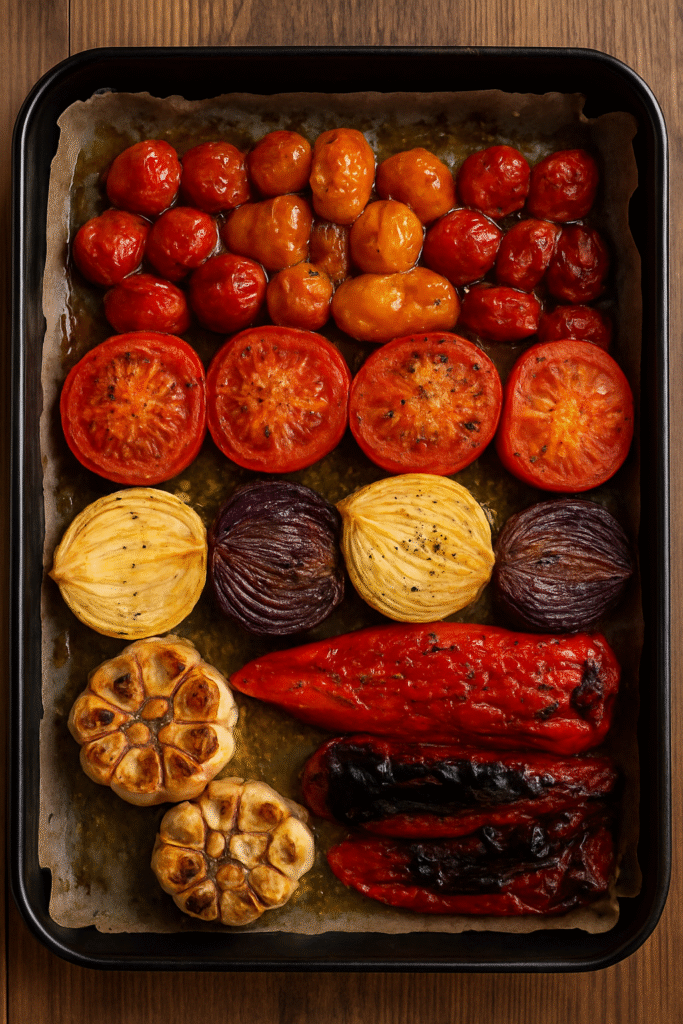
The beauty of this dish lies in its simplicity. The version shown above includes:
-
Tomatoes (red and yellow cherry varieties)
-
Onions (white and red)
-
Garlic bulbs
-
Red bell peppers
-
Olive oil, sea salt, and black pepper
Each of these vegetables plays a unique nutritional role and together they form a symphony of vitamins, minerals, fiber, and plant-based proteins.
Nutritional Breakdown: Understanding the Science
Let’s analyze what makes this roasted vegetable combination so beneficial.
1. Tomatoes: Lycopene Powerhouses
Tomatoes are rich in lycopene, a carotenoid with powerful antioxidant properties that support heart health and may help reduce the risk of certain cancers.
When tomatoes are roasted, the lycopene becomes more bioavailable — meaning the body can absorb it more efficiently.
They also contain:
-
Vitamin C: Boosts immunity and skin health.
-
Potassium: Regulates blood pressure.
-
Small amounts of protein and fiber.
2. Onions: The Prebiotic Boost
Onions, both red and white, contain inulin and fructooligosaccharides, compounds that act as prebiotics — feeding the beneficial bacteria in your gut.
They also have quercetin, an antioxidant linked to reduced inflammation and improved cardiovascular health.
3. Garlic: The Natural Antibiotic
Roasted garlic develops a mellow, nutty flavor but retains its medicinal benefits.
It contains allicin, which supports immune function, and sulfur compounds that help detoxify the liver and improve cholesterol profiles.
4. Bell Peppers: Vitamin C Superstars
Red bell peppers contain more vitamin C than oranges.
They’re also rich in beta-carotene (which the body converts into vitamin A), essential for eye health and skin regeneration.
The roasting process enhances their sweetness while maintaining their nutrient integrity.
5. Olive Oil: The Healthy Fat
A drizzle of extra virgin olive oil not only helps vegetables roast evenly but also adds heart-healthy monounsaturated fats.
These fats assist in the absorption of fat-soluble vitamins such as A, D, E, and K — making your roasted dish more nutritionally efficient.
Protein and Bodybuilding Perspective
Although vegetables are not typically high in protein, they play a crucial supporting role in muscle-building nutrition. Here’s why:
-
Micronutrient Support:
Vitamins like B6, C, and K, and minerals like magnesium and potassium are vital for muscle contraction, recovery, and protein metabolism. -
Digestive Health:
The fiber in roasted vegetables promotes better nutrient absorption from high-protein meals like chicken, fish, or tofu. -
Antioxidant Recovery:
Exercise generates oxidative stress. Antioxidants from vegetables (like lycopene and quercetin) help reduce muscle inflammation and accelerate recovery.
Pairing roasted vegetables with a protein source such as grilled chicken, salmon, lentils, or quinoa creates a complete muscle-nourishing meal — balancing macronutrients and micronutrients alike.
Recipe: Roasted Vegetable Power Tray
Ingredients
-
2 red bell peppers
-
2 large tomatoes, halved
-
1 red onion, halved
-
1 white onion, halved
-
2 garlic bulbs, halved horizontally
-
A handful of cherry tomatoes (red and yellow)
-
2 tablespoons olive oil
-
1 teaspoon dried oregano
-
A pinch of sea salt and black pepper
Instructions
-
Preheat your oven to 200°C (390°F).
-
Prepare the tray: Line a baking sheet with parchment paper.
-
Arrange the vegetables: Place all ingredients in neat rows for even roasting.
-
Drizzle olive oil and season with oregano, salt, and pepper.
-
Roast for 30–40 minutes, until the edges caramelize and the tomatoes soften.
-
Cool slightly before serving — the flavors intensify as the vegetables rest.
Serving Suggestions
-
As a side dish for grilled chicken or salmon.
-
Mixed with quinoa or couscous for a vegetarian high-protein meal.
-
Blended into a roasted vegetable soup or pasta sauce.
The Micronutrient Matrix
| Vegetable | Key Nutrient | Function |
|---|---|---|
| Tomato | Lycopene | Antioxidant, heart health |
| Onion | Quercetin | Anti-inflammatory |
| Garlic | Allicin | Immune booster |
| Bell Pepper | Vitamin C | Collagen formation |
| Olive Oil | Oleic acid | Healthy fat absorption |
This synergy of nutrients supports metabolism, hormone balance, and cellular repair — all essential components of muscle growth and long-term health.
Scientific Insights: Antioxidants and Longevity
Studies in nutritional science suggest that diets high in plant antioxidants correlate with a reduced risk of chronic diseases and better longevity outcomes.
The polyphenols and carotenoids in roasted vegetables combat oxidative stress and improve mitochondrial efficiency — crucial for athletes and aging adults alike.
Roasting enhances the bioavailability of these compounds, making it a scientifically superior method of preparing vegetables for nutrient absorption.
Mindful Eating and Sustainability
Beyond the nutrients, roasted vegetables promote a mindful eating experience. Their aroma, color, and texture encourage slower, more intentional consumption — improving digestion and satisfaction.
They are also an environmentally friendly meal choice. A diet rich in vegetables and moderate in animal protein reduces the ecological footprint and supports sustainable nutrition.
Final Thoughts: Simplicity Meets Science
Roasted vegetables are a culinary paradox — effortlessly simple yet nutritionally profound. They offer the perfect intersection between flavor, health, and sustainability.
For those invested in bodybuilding, fitness, or holistic health, these nutrient-dense foods are the foundation of performance and longevity. When paired with lean proteins and complex carbohydrates, roasted vegetables become more than just a side dish — they become an essential building block of wellness.
✨ Eat smart. Live strong. Stay balanced.